 EN
EN

2015-2025 Global Pilates Development and Fitness Effect Evaluation Report Abstract
This report systematically analyzes the global Pilates market trends and assesses its fitness benefits from 2015 to 2025, focusing on the growth trajectory of the European and American markets and the impact of Pilates on the health of fitness enthusiasts. The global Pilates market is projected to grow from approximately US$144.20 million in 2015 to US$57.233 billion in 2025, and is projected to reach US$108.814 billion in 2033, with a compound annual growth rate of 7.4%.
In the European and American markets, North America holds a 41% global market share, with over 30 million regular Pilates participants in the US. Germany is the largest market in Europe, with 11.7 million fitness club members, representing 14% of the total population. Participants exhibit distinct demographic characteristics: 65% are female, 40% are aged 30-50, and male participation has increased by 20% from 2017 to 2022. In terms of fitness benefits, Pilates demonstrates significant effects across three dimensions: improving physical sub-health, improving fitness, and improving mental health. 72% of users reported improved flexibility, 58% reported relief from back pain, and 70% reported increased core strength. Regarding mental health, 52% of practitioners experienced reduced stress levels, and 30% reported improved mental well-being. Regular practice can reduce cortisol levels by up to 30%.
1. Global Pilates Market Development Trends (2015-2025)
1.1 Market Size and Growth Trajectory
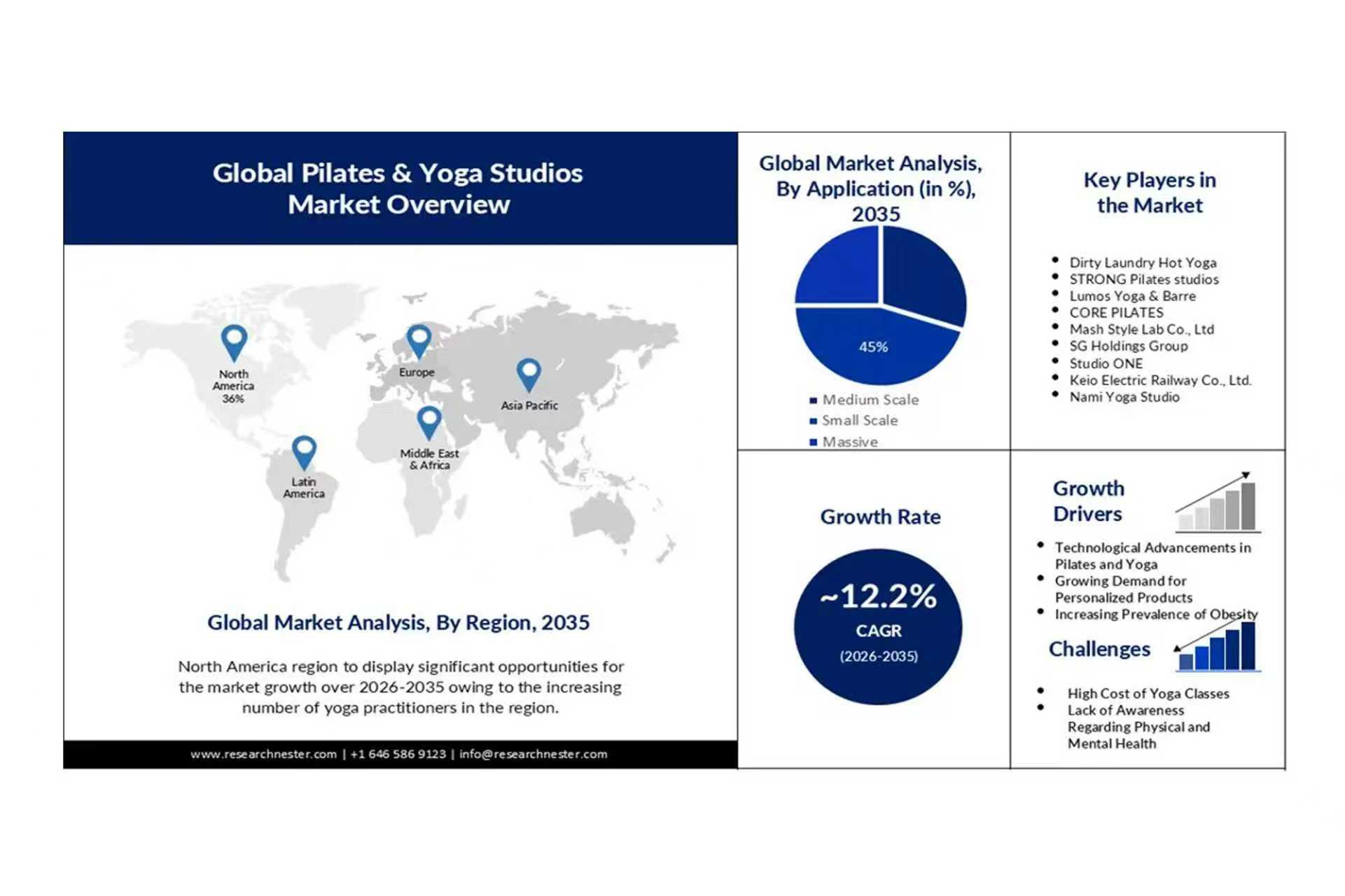
The global Pilates market has experienced significant growth over the past decade. According to the latest market research data, the Pilates equipment and devices market size started at US$144.20 million in 2015 and is expected to reach US$521.8 million by 2031, with a compound annual growth rate (CAGR) of 10.5% from 2022 to 2031. This growth trend is even more pronounced in the Pilates studio market, with the global Pilates studio market size projected to grow from US$57.233 billion in 2025 to US$108.814 billion in 2033, with a CAGR of 7.4% during the forecast period [1]. It is worth noting that there are certain differences in the assessment of market size among different market research institutions, mainly due to different statistical calibers. Some institutions combine Pilates and yoga into statistics, showing that the Pilates and yoga studio industry size in 2025 will be US$181.47 billion [2]. Research specifically on the Pilates market shows that the global Pilates market was worth $35 billion in 2024 and is expected to reach $420.98 billion by 2032, with a compound annual growth rate of 11.50% [3]. The COVID-19 pandemic has had a complex impact on the Pilates market. In 2020, the global Pilates and yoga studio market fell from $12,769.88 million in 2019, but then recovered rapidly and is expected to reach $26,930.18 million by 2028, with a compound annual growth rate of 10.1% from 2021 to 2028. This recovery speed demonstrates the resilience and adaptability of Pilates as a form of fitness.
1.2 Analysis of major regional markets
The global Pilates market shows a clear regional concentration, with North America and Europe being the two largest markets. According to the latest data, North America will account for 41% of the global Pilates studio market in 2025, mainly due to its mature fitness culture, strong health economy and early adoption of the boutique fitness trend. The United States, as the dominant force in the North American market, has more than 30 million people regularly participating in Pilates, a figure that fully reflects the strong demand for customized digital experience market [4]. The growth drivers of the US Pilates market include a strong fitness culture, digital infrastructure and high spending on boutique health. In the United States, Pilates is widely popular in metropolitan areas, driven by celebrity influence, virtual classes supported by advanced digital infrastructure, and a strong community of certified instructors. The European market is also strong, accounting for 30% of the global market share in 2025 [4]. The prosperity of the European Pilates market is mainly due to the improvement of people's health awareness. Germany, the United Kingdom and France are the main countries where people first come into contact with yoga or Pilates, then become enthusiasts and eventually form a circle of like-minded friends, which is particularly evident in urban areas such as apartment buildings or among people with young friends [5].
Germany, as the largest fitness market in Europe, has 11.7 million fitness club members, accounting for 14% of the total population, exercising in 9,700 private fitness clubs, and annual revenue exceeding US$5.5 billion. The size of Germany's fitness market may be related to its having the largest and strongest economy in Europe, which also explains why its health and fitness market ranks higher than the UK, France, Italy and Spain.
Although the Asia-Pacific region started later, it is growing rapidly and will account for 20% of the global market share in 2025 [4]. The Asia-Pacific region is particularly prominent in the Pilates equipment and equipment market and is the highest revenue contributor, expected to reach US$179.51 million by 2031, with a compound annual growth rate of 11.3%. Population growth and rising per capita income are the main reasons for the growth of the Pilates equipment market in the Asia-Pacific region.
1.3 Analysis of Market Driving Factors
The rapid growth of the Pilates market is driven by multiple factors, with rising health awareness being the most significant. According to market research, growing awareness of health and wellness drives approximately 33% of global Pilates studio adoption. Consumers are increasingly prioritizing preventative healthcare, mental health, and a balanced lifestyle, making Pilates a suitable option for its dual physical and mental benefits.
An aging population is another significant driver. Pilates' inclusive nature makes it a popular exercise option for seniors and those who spend a lot of time in sedentary situations. Its low-impact design minimizes injury risk while improving flexibility and strength. Medical professionals are increasingly recommending Pilates as a safe fitness option for seniors and those undergoing physical rehabilitation. As the global aging population expands, particularly in developed regions, the demand for tailored fitness solutions is growing.

2. In-depth analysis of European and American markets
2.1 Development Characteristics of the US Market
The US Pilates market exhibits typical characteristics of a mature market, with a large number of participants and a diversified service system. According to global consumer survey data, more than 30 million people in the United States regularly participate in Pilates. This figure not only reflects the size of the market, but also reflects the strong demand for customized digital experience market [4]. The development of the US Pilates market is due to its unique cultural and economic environment, including a strong fitness culture, advanced digital infrastructure and high spending power for boutique fitness. A notable feature of the US market is the high degree of branding and chain operation. Leading chain brands occupy the largest market share among listed companies and control 27% of the global market share by 2025, mainly due to their extensive franchise and hybrid service products. This franchise model enables Pilates to expand rapidly while maintaining consistency in service quality. Technology integration is another important feature of the US market. The United States is a leader in virtual classes, digital platforms and smart device integration. Many studios offer hybrid services that combine real-time teacher feedback, pre-recorded classes and subscription-based models, which improves user convenience. Studios benefit from a wider geographical coverage and reduced reliance on physical space constraints. The US market also exhibits significant regional disparities. In metropolitan areas, Pilates is driven by celebrity influence, virtual classes supported by advanced digital infrastructure, and a strong community of certified instructors. Cities like New York, Los Angeles, and Chicago are not only home to a concentration of Pilates studios but also serve as testing grounds for innovative service models.
In terms of consumption patterns, the US Pilates market is trending towards premiumization. The average cost of a Pilates class is between $10 and $25, but private lessons at boutique studios can cost over $100 per session. 55% of Pilates classes are now offered online, increasing accessibility, and 80% of Pilates workouts combine mat and equipment exercises.
2.2 Market Overview of Major European Countries
The European Pilates market exhibits diverse and localized development characteristics, with each country developing a unique market structure based on its own cultural background and fitness traditions. Germany, Europe's largest fitness market, offers a representative example of the development of Pilates. Although its founder, Joseph Pilates, was German, Pilates was not always a well-known exercise method in Germany. In 2002, when a trainer attempted to introduce Pilates to the German fitness industry, it was virtually unknown; even high-end fitness studios in Munich were reluctant to offer Pilates classes.
However, over time, the German Pilates market has experienced rapid growth. The establishment of the German Pilates Association (Deutscher Pilates Verband) in 2005 marked the official launch of Pilates in Germany. Over the past five years, with Pilates classes offered in mainstream gyms and various studios, this exercise method has become more widely understood and practiced. A key feature of the German market is the popularity of machine-based Pilates (Reformer Pilates), with HIIT Pilates being particularly popular.
The UK market has demonstrated a strong preference for Pilates. According to the latest HFE poll, 70% of UK fitness enthusiasts (including regular gym goers and fitness professionals in training) would rather participate in Pilates than yoga [6]. This data reflects the high acceptance and popularity of Pilates among the UK fitness population. The development of the UK Pilates market has benefited from its long-standing fitness culture and open attitude towards innovative fitness methods. The French and Italian markets are also active. The European Pilates Reformer Market Report shows that the French market revenue grew from US$8.355 million to US$21.668 million, with an annual growth rate of 8.357%; the Italian market revenue reached more than US$11 million. These data show that despite starting relatively late, the Pilates market in France and Italy is experiencing rapid growth. A common feature of the European market is the emphasis on overall health. Europe's emphasis on overall health, coupled with its aging population, has driven demand for Pilates as a form of functional and rehabilitative exercise. Countries such as Germany, the UK and France are witnessing a surge in boutique fitness studios, including dedicated Pilates facilities. Government initiatives to promote physical activity and awareness of preventive healthcare are also contributing to market expansion. The European market also exhibits a strong propensity for technological innovation. Europe's openness to healthy tourism and eco-conscious lifestyles supports sustainable studio design and outdoor instruction, further increasing customer engagement and satisfaction. Many European studios are at the forefront of equipment innovation, environmental design, and service models.
2.3 Demographic Analysis of Participants
Pilates participants exhibit distinct demographic characteristics, which are crucial for understanding market demand and developing fitness training strategies. In terms of gender distribution, women dominate Pilates practitioners, accounting for 65% of all participants. However, this ratio is shifting, with male participation increasing by 20% from 2017 to 2022, demonstrating Pilates' growing acceptance among men.
In terms of age structure, Pilates exhibits a broad age distribution, but with a clear trend toward greater concentration. 40% of Pilates participants are aged 30-50, a group typically characterized by stable incomes, a strong health consciousness, and the time to devote to regular exercise. Notably, 14% of Pilates users are under 20, indicating growing interest among young people.
Pilates also holds a significant position among seniors, with 35% of seniors regularly practicing Pilates, reflecting its popularity as a low-impact, safe exercise method. Pilates can improve the mobility of 70% of elderly patients and help 54% of elderly people improve their balance. In terms of frequency of practice, 33% of Pilates practitioners practice 2-3 times a week. This frequency not only ensures the effect of exercise but also has practical feasibility. Analysis of the motivation of practitioners shows that 85% of Pilates practitioners start exercising to improve their health, which shows that health improvement is the main driving force for people to participate in Pilates. Social media plays an important role in the dissemination of Pilates. 60% of Pilates practitioners use social media to find new exercises or courses. This data reflects the importance of digital marketing and social media promotion in the Pilates market. At the same time, it also shows that practitioners have a strong sense of self-learning and a demand for new content. In terms of geographical distribution, Pilates participants are mainly concentrated in urban areas, especially metropolitan areas. In the United States, 43% of Pilates enthusiasts are between 25 and 34 years old [7]. This group usually lives in cities and has a high level of education and health awareness. In Europe, urban areas in Germany, the United Kingdom, and France are the main markets for Pilates. People in these areas often become enthusiasts and form like-minded communities after their first exposure to yoga or Pilates [5].

3. Pilates fitness effect evaluation
3.1 Effect of improving physical sub-health
Pilates has shown significant effects in improving sub-health conditions, especially in chronic pain management, flexibility improvement and overall physical function improvement. According to the results of a systematic review and meta-analysis, Pilates has a positive effect on improving pain, functional impairment and quality of life in patients with chronic non-specific low back pain. In terms of pain assessment, Pilates has a positive effect on the pain scale, Oswestry Disability Index and Roland-Morris Disability Questionnaire [8]. In actual application, 58% of Pilates practitioners said that the exercise helps relieve low back pain. A randomized controlled trial showed that the Pilates group had significantly reduced pain intensity, reduced functional impairment, and improved health-related quality of life after the intervention, which was significantly improved compared with the home exercise group [9]. Flexibility improvement is one of the most significant effects of Pilates. 72% of Pilates users reported improved flexibility, which is the highest proportion among all fitness effects. Pilates exercises can significantly improve the flexibility of various parts of the body, especially in the hip joints, hamstrings and lower back areas. Regular practice can help relieve tension and improve range of motion [10]. Strengthening the core muscles is the core advantage of Pilates. 70% of Pilates students reported increased core strength, and 67% of Pilates regular exercises focused on core strengthening. Pilates can improve lumbar pelvic stability by specifically targeting the deep core muscles. Studies have shown that 65% and 85% of Pilates group subjects passed the lumbar pelvic stability test at 4 and 8 weeks of training, respectively, while no subjects in the control group passed the test at any stage [11]. Posture improvement is another important effect of Pilates. 65% of practitioners reported improved posture. Pilates can specifically train the core muscles, significantly improving the stability and endurance of the neck and waist muscles, thereby effectively alleviating poor posture caused by long periods of sitting. Improved core strength can also improve posture, helping to reduce spinal degeneration and neck and shoulder stiffness. Improved balance ability is particularly evident in the elderly. Pilates can help 54% of the elderly improve their balance ability and improve the mobility of 70% of elderly patients. This has important implications for preventing falls and improving quality of life in the elderly.
Improvement in body composition is also an important effect of Pilates. Pilates exercises tend to produce better results in terms of weight, body fat percentage, hip circumference, waist circumference, and skinfold thickness on the chest, abdomen, triceps, and iliac crest, mainly in female samples [12]. Available evidence suggests that Pilates exercises are effective in reducing obesity as a multifactorial disease in terms of body composition and functional body composition.
3.2 Quantitative Analysis of Fitness Effects
The fitness effects of Pilates can be evaluated by a number of quantitative indicators, which cover multiple dimensions such as strength, endurance, flexibility and body composition. In terms of muscle strength, Pilates training can bring significant improvements. Studies have shown that the Pilates training group showed significant differences in all joint range of motion and muscle strength variables compared with baseline data, with the most significant improvements occurring in shoulder flexion range of motion, abdominal strength and body strength endurance. Activation and strengthening of the core muscles are the unique advantages of Pilates. Studies have shown that Pilates is not inferior to equal-volume exercise in improving core muscle strength, and may be better than unequal-volume exercise or no exercise in improving core muscle strength (as shown by muscle thickness) [13]. This provides new evidence for Pilates as an effective intervention for patients with chronic low back pain. Improvements in endurance are also significant. In the Pilates group, statistically significant improvements were observed in the scores of the sit-up test, sit-up test, and push-up test at week six, as well as improvements in static and dynamic balance scores [14]. These results indicate that Pilates practice can improve both muscle endurance and balance ability. In terms of energy expenditure, Pilates can burn about 210 calories per 30-minute exercise. Although this number is relatively low, considering the low-impact characteristics of Pilates and its emphasis on muscle control, its energy consumption efficiency is still considerable. More importantly, Pilates can increase the basal metabolic rate, helping the body burn more energy at rest.
Improvements in body composition are reflected in many aspects. Studies have shown that Pilates can improve cardiopulmonary function, muscle strength, muscle endurance, flexibility and body composition, and have a significant impact on overall health. In studies of overweight women, Pilates exercises have shown significant effects in improving health-related physical fitness [15].
Improved athletic performance is also an important indicator. 20% of Pilates practitioners reported improved athletic performance. Pilates training has shown particular value in the athlete population. A study of cricket players showed that the experimental group had better improvements in core muscle strength, hamstring flexibility, agility, speed and power than the control group [16].
Improved muscle lines are an important reason why many people choose Pilates. 78% of users report that Pilates improves muscle definition. Through precise muscle control and resistance training, Pilates helps create a tighter, more defined body.
Improved respiratory function is a unique benefit of Pilates, with 50% of Pilates practitioners reporting improved breathing patterns. Pilates emphasizes the coordination of breathing and movement, which can improve lung capacity and respiratory efficiency. Studies have shown that the Pilates group showed significant positive changes in spirometry, the Stange test, and the Gencha test, as well as slight improvements in respiratory rate and body mass index.
3.3 Promotion of mental health
Pilates's positive effect on mental health is one of its important advantages as a form of fitness. Its effects cover stress relief, mood improvement, and cognitive function enhancement. Stress relief is one of the most significant effects, with 52% of Pilates practitioners experiencing reduced stress levels. Regular Pilates practice can reduce cortisol levels by up to 30%. As the main stress hormone, a reduction in cortisol levels is important for overall health.
The improvement of anxiety and depression symptoms has been confirmed in clinical studies. A study of patients with multiple sclerosis showed that Pilates significantly reduced depressive symptoms [17]. These effect sizes indicate that Pilates has a moderate to large clinically significant improvement in mental health.
Pilates also showed good psychological improvement effects in diabetic women. Studies showed that there were significant differences in anxiety and depression scores before and after the intervention [18]. These data indicate that Pilates can effectively reduce anxiety and depression while improving anthropometric indicators in diabetic women.
The improvement in overall mental health is reflected in multiple dimensions. 30% of Pilates participants reported improved mental health. Pilates significantly improves mental health because it requires a high level of concentration, which helps people forget other things that bother them. This type of focused practice is particularly valuable for modern people to cope with fast-paced life and multiple pressures.
Relief of fatigue is an important manifestation of improved mental health. Pilates can significantly reduce cognitive fatigue, physical fatigue, psychosocial fatigue, and total fatigue [17]. Relief of fatigue not only improves physical condition, but also has a positive impact on emotional and psychological state.
Improvement in quality of life is a comprehensive manifestation of improved mental health. A systematic review and meta-analysis of postmenopausal women showed that Pilates exercises showed significant effects in five health-related quality of life areas: body pain, physical function, social function, role body, and role emotion [19].
Improvement in sleep quality is also an important aspect. 40% of Pilates users reported improved sleep quality. The importance of good sleep to mental health is self-evident. Pilates helps improve sleep quality by relaxing the body and relieving stress.
Improvement in cognitive function is particularly evident in the elderly. Research shows that sedentary women in their 60s who performed 30 minutes of mat and machine Pilates exercises twice a week for six months experienced significant improvements in cognitive function. This has important implications for preventing dementia and maintaining cognitive function.
Heightened body awareness is a unique benefit of Pilates. 82% of Pilates enthusiasts report increased body awareness. This heightened awareness not only improves athletic performance but also positively impacts mental well-being, helping people better understand and control their bodies.
4. Data-based fitness guidance strategy recommendations
4.1 Personalized Programs for Different Populations
Based on market data analysis and effectiveness evaluation, Pilates fitness instruction strategies should be tailored to the characteristics of different populations. For the core demographic of 30-50 years old, who account for 40% of Pilates participants and are generally health-conscious and financially stable, programs targeting this demographic should balance efficiency and effectiveness. A practice frequency of 2-3 times per week can be designed, consistent with the actual frequency of 33% of practitioners. Classes should incorporate mat and machine exercises, as 80% of Pilates workouts utilize this combination, focusing on core strengthening, flexibility improvement, and stress relief.
For the youth group under 20, while only accounting for 14%, this demographic is experiencing a significant growth trend. Young people generally have a good physical foundation and learning ability, so program design should focus on fun and innovation. This can include more HIIT elements and modern music, combined with digital teaching tools, and leveraging their preference for social media, as 60% of practitioners use it to find new exercises.
The elderly, representing 35% of participants, represent a significant market segment. Programs for older adults should place particular emphasis on safety and functional improvement. Emphasis should be placed on improving balance (54% of older adults reported benefiting), improving mobility (70% of older patients), and pain management. Exercise intensity should be moderate, emphasizing precision over intensity, and a frequency of twice weekly is appropriate.
Although men currently comprise only 35% of participants, their participation rate increased by 20% from 2017 to 2022. Programs for men should emphasize strength and functional training, integrating Pilates with other exercise modalities, such as using Pilates as a recovery and stretching component after strength training. Emphasis should be placed on core strength (70% of participants reported improvement), back health (58% reported relief from low back pain), and improved athletic performance (20% reported improvement).
Sedentary individuals are a particular target group, given the complexities of modern lifestyles. Pilates is particularly well-suited for these individuals because it specifically targets core muscles and alleviates poor posture caused by prolonged sitting. Program design should focus on improving flexibility in the hips, hamstrings, and lower back [10], as well as relaxing the neck and shoulders and maintaining spinal health.
4.2 Recommendations for Practice Frequency and Duration
Based on the effect evaluation data and participant behavior analysis, the frequency and duration of Pilates exercises should be scientifically designed according to different goals and population characteristics. According to existing data, 33% of practitioners practice 2-3 times a week, which strikes a good balance between ensuring effectiveness and operability. For beginners, a gradual frequency increase strategy is recommended. In the first week, you can start with 1 time a week to allow the body to adapt to the new movement pattern; increase to 2 times a week from the second to fourth weeks; and from the fifth week onwards, you can increase to 3 times a week based on your personal situation. This gradual approach helps reduce the risk of injury and improve adherence. For people with clear health improvement goals, the frequency of practice should be increased accordingly. For example, for patients with chronic low back pain, studies have shown that 2-3 times a week of Pilates exercises can significantly improve pain and functional impairment [9]. For people who want to improve flexibility, practicing 3 times a week can achieve better results, as 72% of users reported improved flexibility. In terms of practice duration, a reasonable duration for a single exercise is usually around 55 minutes, which is the average duration of a Pilates studio class. However, the duration should be adjusted based on the practitioner's fitness level and goals. Beginners can start with 30 minutes and gradually increase to 55 minutes. For those with limited time, fragmented practice, such as short 15-20 minute sessions daily, can also yield results.
The duration allocation also varies for different types of exercises. Mat-only exercises typically take 45-60 minutes, while those that incorporate equipment may take 60-75 minutes due to the increased preparation and adjustment time required. Eighty percent of Pilates workouts combine mat and equipment exercises; for this combination, a recommended schedule of 50 minutes of mat work and 25 minutes of equipment work is recommended.
The timing of your practice is also important. For most people, practicing in the morning helps boost their energy levels for the day, while practicing in the evening helps them relax and improve sleep (40% of users report improved sleep). Choosing the right time for your practice is recommended based on your individual schedule and goals.
For specific individuals, duration and frequency require special consideration. For the elderly and people with weak physical fitness, it is recommended to practice for 30-40 minutes each time, twice a week; teenagers can appropriately increase it to 45-60 minutes each time, 3-4 times a week; for sedentary people, it is recommended to perform simple stretching exercises for 15-20 minutes every day, plus a full course twice a week.
4.3 Effect Expectation and Risk Control
Based on a large amount of research data and practical experience, setting reasonable expectations for the effects of Pilates exercises is important for maintaining the enthusiasm and persistence of practitioners. In terms of physical effects, practitioners can usually feel significant improvements within 4-8 weeks. Flexibility improves most rapidly, and most people can feel changes in their bodies within 2-4 weeks, which is consistent with the data that 72% of users reported improved flexibility.
It usually takes 4-6 weeks to notice an increase in core strength, and 70% of students reported an increase in core strength. It is recommended that practitioners conduct self-assessments in the 4th and 8th weeks, record physical sensations and measure relevant indicators such as waist circumference and body fat percentage.
The effect of pain relief varies from person to person. For patients with chronic low back pain, studies have shown that pain intensity is significantly reduced after 6 weeks of intervention. However, long-term persistence is required to maintain the effect. Follow-up after 6 months showed that the improvement in pain and functional impairment still exists but has weakened [9].
Improvements in mental health can usually be felt 2-3 weeks after the start of practice. 52% of practitioners experienced a reduction in stress levels, and 30% reported improved mental health. Practitioners are advised to keep a practice diary to record mood changes and stress levels, which will help quantify the improvement effect. Risk control is an important aspect of Pilates practice that cannot be ignored. Although Pilates is considered a low-risk sport, the following aspects still need to be noted: First, the standardization of movements. Pilates emphasizes precise movement control, and incorrect movements may lead to injury. It is recommended that beginners practice under the guidance of an experienced coach, especially in the first 4-6 weeks. 60% of Pilates coaches hold additional fitness certifications, and choosing a qualified coach can effectively reduce risks. Second, intensity control. Pilates is not a high-intensity exercise and should not cause excessive fatigue or pain. If pain occurs during practice, you should stop immediately and consult a coach. Studies have shown that the average compliance with Pilates is ≥80% [20], and good compliance is based on a reasonable intensity arrangement. Third, individual differences are taken into consideration. Different people have different physical conditions and health goals, and personalized plans need to be developed. Especially for people with special health problems, such as hypertension, diabetes, and joint diseases, Pilates should be performed under the guidance of a doctor. Studies have shown that Pilates can reduce systolic and diastolic blood pressure by 4.76 mmHg respectively [21], which is beneficial for patients with hypertension, but medical supervision is still required.
The fourth is the safety of the environment and equipment. Ensure that the practice environment is safe, without obstacles, and the floor is non-slip. Use qualified equipment, especially large equipment such as reformers, which require regular inspection and maintenance.
The last is the principle of gradual progress. Avoid doing overly complex or high-intensity exercises at the beginning. Start with basic movements and gradually increase the difficulty and intensity. The following advanced model is recommended: learn basic movements and breathing methods in weeks 1-2; increase the complexity of movements in weeks 3-4; try some intermediate movements in weeks 5-6; and challenge advanced movements after week 7 according to personal circumstances.
5. Conclusions
Through a systematic analysis of the global Pilates market development data from 2015 to 2025 and a scientific evaluation of its fitness effects, we can draw the following main conclusions:
The global Pilates market has experienced strong growth over the past decade, with the market size increasing from US$144.20 million in 2015 to US$57.233 billion in 2025, and is expected to reach US$108.814 billion by 2033, with a compound annual growth rate of 7.4% [1]. North America and Europe are the main markets, accounting for 41% and 30% of the global share respectively [4], reflecting the dominance of mature markets. However, the Asia-Pacific region is rapidly rising and shows great growth potential.
The demographic characteristics of the participating population show a trend of diversification. Although women still dominate (65%), the male participation rate is growing rapidly, increasing by 20% from 2017 to 2022. The age distribution is broad, with 40% of participants aged 30-50, 14% under 20, and 35% seniors. This demographic provides continued market growth momentum.
Pilates demonstrates impressive fitness benefits. Regarding physical health improvements, 72% of users reported improved flexibility, 58% reported relief from back pain, and 70% reported increased core strength. Regarding mental health, 52% of practitioners experienced reduced stress levels, 30% reported improved mental well-being, and regular practice can reduce cortisol levels by up to 30%. These data strongly demonstrate the value of Pilates as a comprehensive fitness method.
[1] Pilates Studios Market Forecast To 2033 https:// www.proficientmarketinsights.com/ market-reports/ pilates-studios-market-2794
[2] Pilates & Yoga Studios Market Size https:// www.researchnester.com/ reports/ pilates-yoga-studios-market/ 5414/market-size
[3] Pilates Market Forecast, Global Report 2025-2033 https:// www.futuredatastats.com /pilates-market
[4] Pilates Application Market Size, SWOT, Market Share and Forecast 2032 https:// www.verifiedmarketreports.com/ zh/ product/ pilates-apps-market /
[5] Pilates & Yoga Studios Market https:// www.futuremarketinsights.com/ reports/ pilates-and-yoga-studios-market
[6] Pilates or Yoga? https://www.hfe.co.uk/ pilates/ articles/why-70-percent-of-people -would-rather-do-pilates-than-yoga/
[7] Yoga and Pilates Fans https:// www.start.io/ audience/ yoga-and-pilates-fans-in-united-states
[8] Yu Z, et al. (2023). Efficacy of Pilates on Pain, Functional Disorders and Quality of Life in Patients with Chronic Low Back Pain: A Systematic Review and Meta-Analysis. International journal of environmental research and public health, 20(4), 2850. https:// doi.org/ 10.3390/ ijerph20042850
[9] Tottoli, et al. (2024). Effectiveness of Pilates compared with home-based exercises in individuals with chronic non-specific low back pain: Randomised controlled trial. Clinical rehabilitation, 38(11), 1495– 1505. https://doi.org/ 10.1177/ 02692155241277041
[10] Pilates for Office Workers: Exercises to Combat the Effects of Sitting All Day https://pilates.shop/blogs/ pilates-tips/ pilates-for-office-workers-exercises-to- combat-the-effects- of-sitting-all-day
[11] Effects of Pilates Training on Lumbo-Pelvic Stability and Flexibility(pdf) https://www.pilatesfisios.it/ ricerche% 20pdf/ pilatesstability.pdf
[12] Efficacy of Pilates in Functional Body Composition: A Systematic Review https://www.mdpi.com/2076-3417/12/15/7523/ pdf?version=1659527487
[13] Pilates to Improve Core Muscle Activation in Chronic Low Back Pain: A Systematic Review https://typeset.io/pdf/ pilates-to-improve-core-muscle-activation-in-chronic-low-gi5rjblr.pdf
[14] Can a pilates exercise program be effective on balance, flexibility and muscle endurance? A randomized controlled trial. https:// www.unboundmedicine.com/ medline/ citation/ 26473443/ Can_a_pilates_ exercise_ program_ be_effective _ on_balance_ flexibility _and_ muscle_endurance _A_ randomized_ controlled_ trial_
[15] Efficacy of Pilates exercise on health related fitness among overweight women https://www.allsportsjournal.com/article/ 121/ 3-2-42-297 .pdf
[16] Effect of Pilates on Anxiety, Depression, and Anthropometric Indices of Women with Type 2 Diabetes https://brieflands.com /articles/ msnj-143695 .pdf
[17] Home-based Pilates for symptoms of anxiety, depression and fatigue among persons with multiple sclerosis: An 8-week randomized controlled trial https:// sci-hub.ru/downloads / 2021-05-17/a9/fleming2021.pdf#navpanes=0&view=FitH
[18] Effect of Pilates on Anxiety, Depression, and Anthropometric Indices of Women with Type 2 Diabetes https://brieflands.com/articles/msnj-143695 .pdf
[19] Effects of Pilates exercises on health-related quality of life in postmenopausal women: a systematic review and meta-analysis. https:// www.semanticscholar.org/ paper/ Effects-of- Pilates-exercises- on-health-related-of-a- Almeida-Oliveira/ 93d5d09b185d 1923356c89400f 3cd4282302a766
[20] Therapeutic Effects of the Pilates Method in Patients with Multiple Sclerosis: A Systematic Review https:// pubmed.ncbi.nlm.nih.gov/ 35160134/
[21] The efficacy of Pilates method in patients with hypertension: systematic review and meta-analysis. https:// www.semanticscholar.org/ paper/ The-efficacy-of- Pilates-method-in-patients- with-and-Gonz% C3% A1lez-Devesa-Varela/ 71b6f b80aa969a82db 113d039246 fab1c2cded4c